A primer
Proof used to mean showing everything. Now it doesn’t.
Cryptography, zero-knowledge proof, and why math will always hold true.
What is cryptography?
The science of protecting and authenticating data.
Encryption transforms readable information into an illegible format using mathematical algorithms. It ensures that, even if data is intercepted, it remains useless to unauthorized parties.
Two tools in the kit
Encryption
Scrambles a message so it can’t be read until it’s decrypted by the intended recipient.
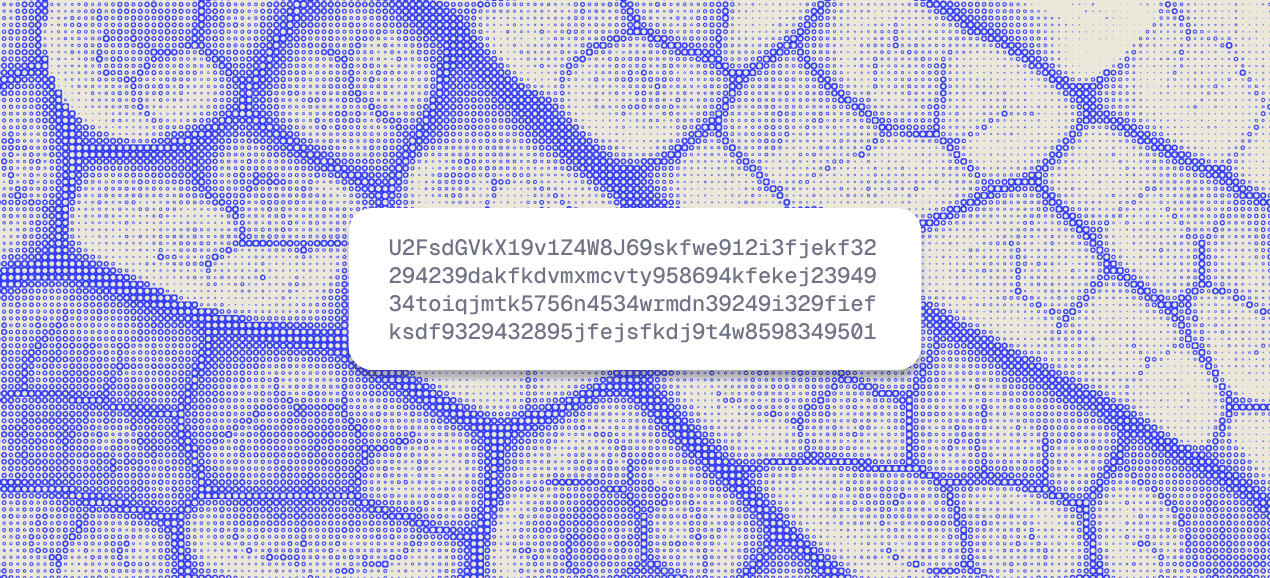
Hashing
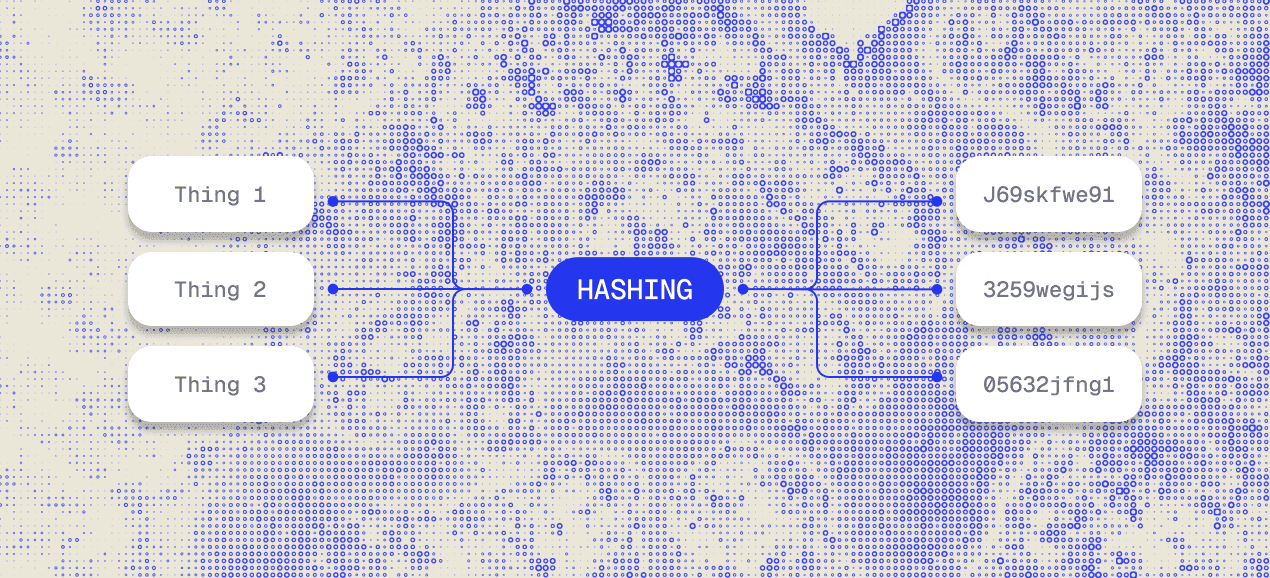
Turns any piece of data into a short mathematical fingerprint. It changes completely if data changes and cannot be reversed.
Where you already rely on it
Every secure banking transaction, password login, and blockchain network uses these elements as the foundation of trust.
What is proof?
Proof is a way to confirm something happened.
Here’s an analogy:
Say you want to verify that your baker used genuine, high-quality ingredients to bake your cake. How do you obtain absolute confirmation it occurred?
Three reasonable options. Three ways to be wrong.
Ask for a video.
A video can be edited, manipulated, and falsified in increasingly sophisticated ways.
Send a friend to check.
People make human errors and can misinterpret what they see.
Drive to the bakery yourself.
But even if you eat a slice, you still can't be sure what happened in the kitchen.
Logs. Third-party verification. Observation. These methods all place trust in systems that are not 100% dependable.
So what do you do if you need irrefutable proof?
You turn to math.
Mathematical proofs don’t ask you to trust a person or a recording. They provide a structural guarantee that is correct by definition.
If you asked for:
- One carrot cake
- This morning
- Using only real vanilla
- Baked by the head baker
A mathematical proof will guarantee that your instructions were followed.
What is a zero-knowledge proof?
If proof sounds good, zero-knowledge proof is better.
A zero-knowledge proof (ZKP) is a cryptographic method that allows one party to prove to another party that a statement is true, without revealing any information beyond the validity of the statement itself.
How selective disclosure works
01
The secrets go in.
Your private data remains locally on your machine.
02
The fingerprint keeps them safe.
A mathematical commitment is generated.
03
The checks run.
The verifier challenges the commitment without seeing the data.
04
One answer comes back.
A single, clean true/false confirmation is output.
What the baker can now do
Prove the cake has no nuts without sharing the exact recipe.
Prove the oven reached 350°F without showing the fuel bill.
Verify pure ingredients were used without exposing proprietary suppliers.
Is it useful?
Yes. Because right now, proving you followed the rules means showing your whole hand.
Traditionally, demonstrating compliance meant handing over your database, logs, and sensitive configurations to an auditor. This process compromises proprietary data.
The cost of being observable
You create concentrated risk.
Centralized logs of sensitive operational audits are major honeypots for external attackers.
You draw the attacker a map.
Exposing system behavior rules teaches malicious entities exactly where to push.
Zero-knowledge proof solves this dilemma.
You present a mathematical guarantee that the criteria were met, keeping the core code and data completely private.
What makes the Inherence zero-knowledge proof unique?
Until now, every performant proof was handwritten.
Historically, constructing zk-proofs required custom assembly by highly specialized cryptographers. It was slow, error-prone, and nearly impossible to scale across dynamic corporate policies.
Inherence makes that process automatic and performant.
We engineered a direct compiler that translates complex human mandates and code rules into optimized zero-knowledge circuits. The outcome is absolute verification at production-level speeds.
Why does that matter?
Handwritten proofs work when the rules are static. And few.
Problem 1: Policies don't hold still.
Organizations constantly change compliance boundaries, risk budgets, and daily thresholds.
- Regulatory compliance updates
- Dynamic asset limits
Problem 2: Handwritten proofs can be buggy.
Manual translation of intent to constraint logic invites devastating contract errors.
- Logic configuration flaws
- Slow verification cycle times
Every Inherence proof is provably correct.
Like handwritten proofs
Optimized for ultra-fast, sub-millisecond execution times at live production scale.
Unlike handwritten proofs
Machine-certified mathematical models verified using formal methods and SMT solvers.
What does this mean for me?
If you work in AI, DeFi, or compliance, this is all good news.
As automated transactions scale across agentic systems, maintaining rigorous guardrails without destroying absolute privacy is paramount.
By proving the rules were followed without disclosing the private details of individual steps, we eliminate operational waste and systematic fraud patterns entirely.
Lower cost.
Zero audit friction or continuous security manual overhead.
Less friction.
Verify complex constraints instantaneously.
A bigger pie.
Unlock trusted financial automation for global markets.